The idea is pretty simple. A founder should not have to spend a morning building a list in Apollo, moving it to another tool for enrichment, writing emails somewhere else, and then checking a CRM to see what happened.
That whole process became too fragmented. Sapphire is my attempt to put it back together.
I built it after spending years on the receiving end of cold email. I saw a lot of it. Most of it was easy to ignore.
The emails I actually noticed usually had something specific behind them. A product launch. A new hire. A technical change. Something that showed the sender had looked at the company before writing.
The bad ones were obvious too. Generic claims, paragraphs of fake personalization, and seven follow-ups that kept asking for a meeting.
Changing my name in the first line did not make the email relevant.
That changed how I thought about outbound. The email matters, but the list comes first. If the company is wrong or the person does not own the problem, better copy does not save the campaign.
I had the same problem doing outbound myself. I was targeting the wrong roles, finding contacts who had left companies, and sometimes reaching out to the CEO when someone else actually owned the problem.
That is where Sapphire starts.
The GTM stack
B2B acquisition is a chain of work. You figure out who you want to sell to, find companies that fit, find the right people, research them, write to them, handle the replies, and learn from what happens.
Today, most of that lives across different products.
| GTM stage | Typical tools |
|---|---|
| ICP | Notion, HubSpot, spreadsheets |
| Data | Apollo, ZoomInfo, LinkedIn Sales Navigator |
| Intelligence | Clay, Exa, Clearbit |
| Targeting | Clay, Apollo, Sales Navigator |
| Outbound | Instantly, Smartlead, Outreach, Salesloft |
| Inbound / Marketing | LinkedIn, X, Google, SEO, Webflow/Next.js |
| Sales | HubSpot, Salesforce, Pipedrive, Gong |
| Revenue | Stripe, billing system, CRM |
| Learning | CRM + call recordings + product analytics |
The simple version looks like this:
 Sapphire
Apollo, Clay, Instantly, Outlook, Outreach, Notion, Claude. Separate tools for separate parts of the acquisition process.
Every tool is useful on its own. The problem is the work between them. Someone still has to decide what to search for, move the data, check it, write the emails, launch the campaign, read replies, update the CRM, and work out what actually produced a customer.
Why I built Sapphire
There were already enough tools. That was not the problem.
The problem was that the founder still had to operate all of them.
You could spend the morning defining an ICP, find hundreds of companies, enrich the list, and still have nothing sent by the end of the day because the next step lived in another product.
I wanted the product itself to do that work.
You already know your product. You know the problem you solve. You should be able to give Sapphire the product and let it work through the repetitive acquisition work around it.
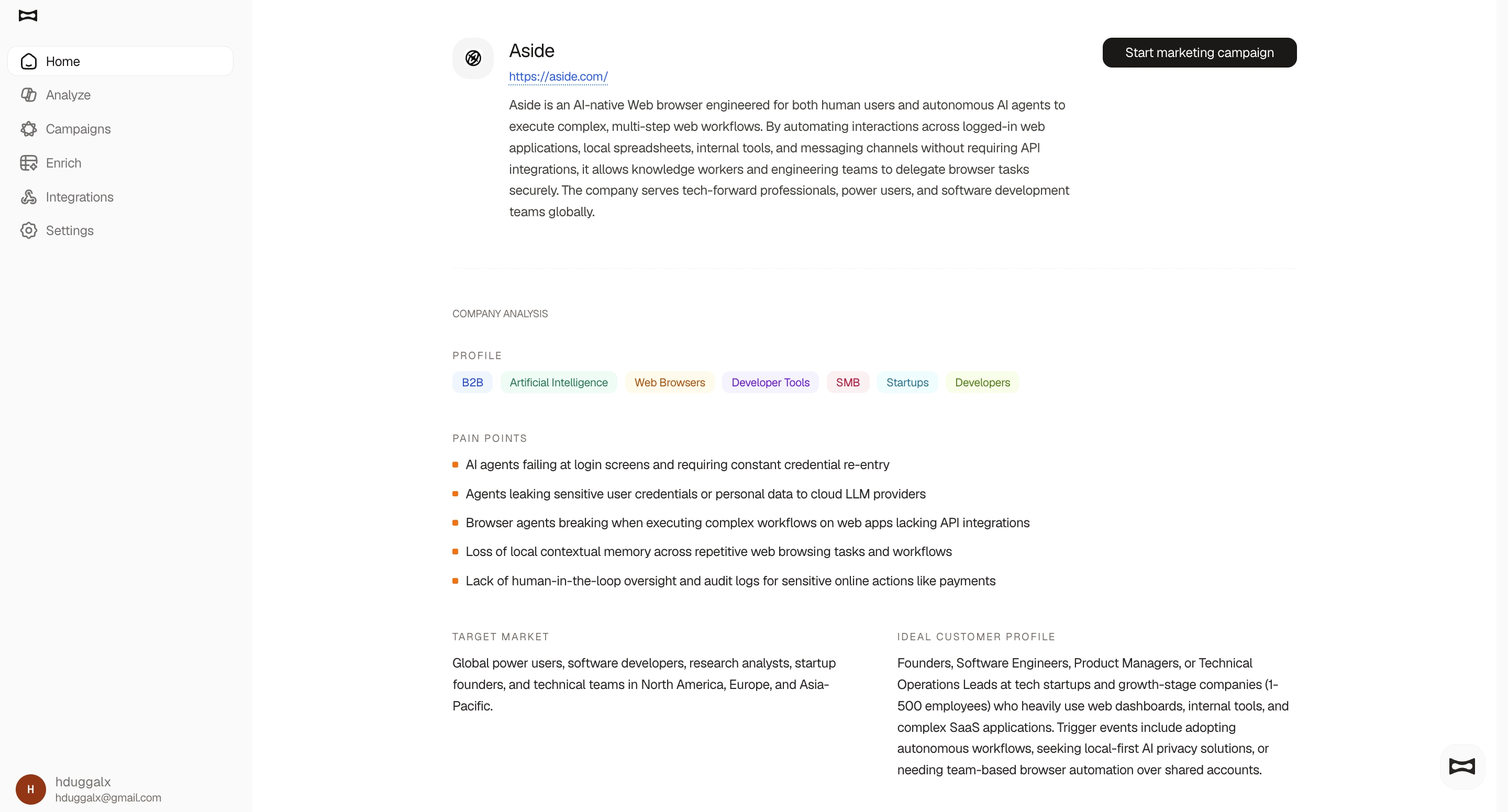
Start with the product.
Give Sapphire your product. It researches the company, market, ICP, positioning, and the people most likely to care.
What Sapphire does
You start with a product URL. Sapphire takes it from there.
- 1. It analyzes the product, market, positioning, pricing, and use cases.
- 2. It builds a specific ICP instead of starting with something broad like "SaaS companies."
- 3. It researches companies and people that fit.
- 4. It enriches the prospects with verified contact and company data.
- 5. It turns the results into structured prospect data that can be exported.
- 6. It writes personalized emails and sends them from the connected inbox.
- 7. It tests different messages and angles.
- 8. It follows up with prospects who do not reply.
- 9. It brings replies back into Sapphire and keeps the conversation connected to the prospect.
- 10. It tracks meetings, conversions, customers, and revenue so the next campaign has something to learn from.
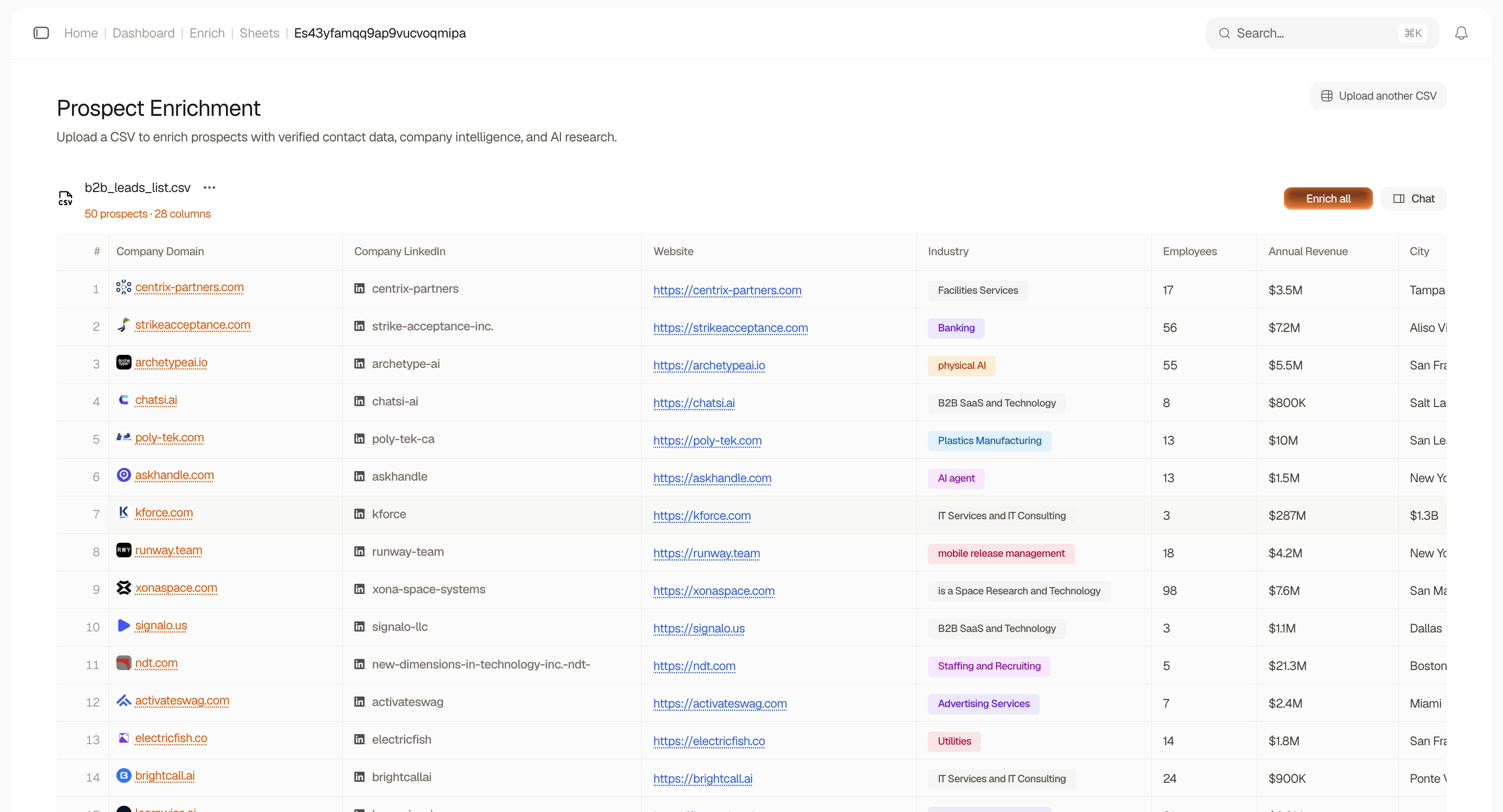
Start with a LinkedIn profile.
I started with only the prospect's LinkedIn profile. That was it.
From a LinkedIn profile to a prospect I can actually use
I started with only the prospect's LinkedIn profile. Nothing else.
Sapphire took that starting point and built the record around it.
- Resolved the person's identity and company.
- Added the company domain, company LinkedIn, role, and contact information.
- Enriched the company with the context needed for prospecting.
What started as a LinkedIn profile became a prospect record with enough context to actually make a decision about the account.
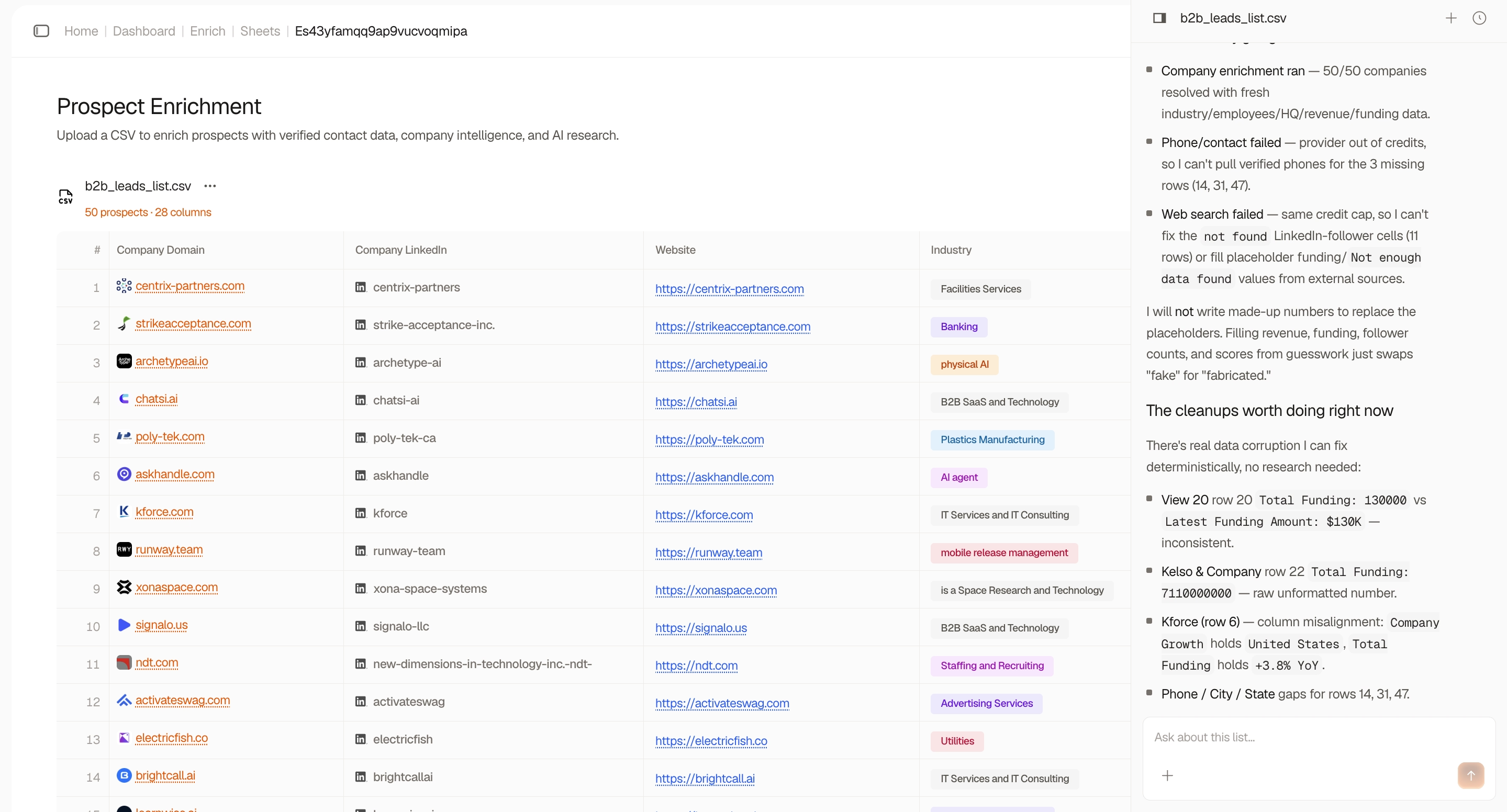
Then understand who is worth contacting.
Sapphire uses the available company and prospect data to evaluate fit and prioritize the people most worth reaching.
This is where enrichment becomes useful. The goal is not to collect as many fields as possible. It is to have enough real context to decide who belongs in the campaign and who does not.
- ICP fit — does this company and role match what we are actually trying to sell?
- Prospecting priority — which prospects should I work first based on the available evidence?
Once the list is researched and qualified, Sapphire can take the next step instead of handing the work back to another tool.
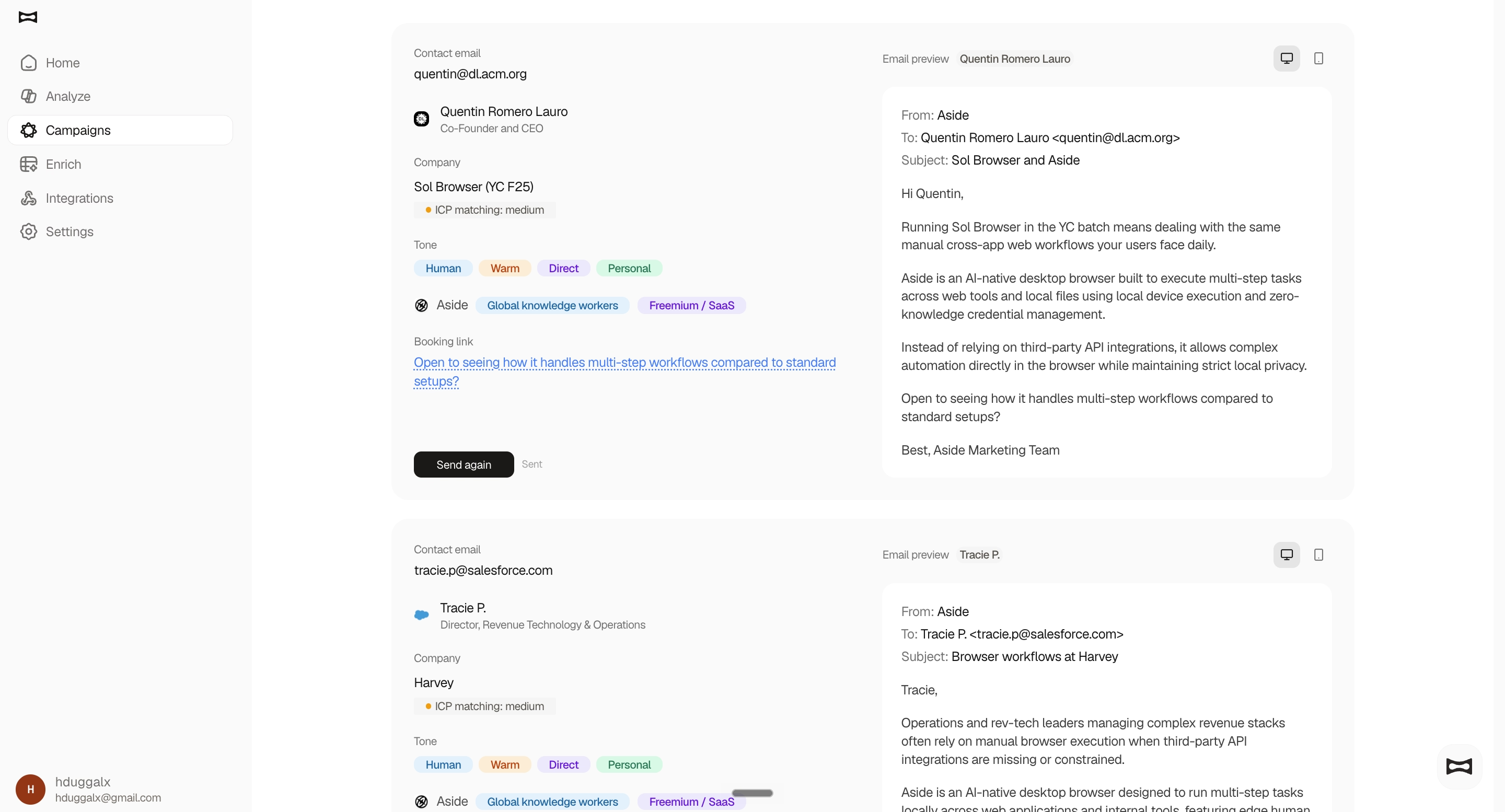
Then reach out.
Once the right prospects are found and researched, Sapphire turns that context into personalized outreach.
The useful part starts when someone replies.
Sapphire keeps the prospect and conversation together instead of sending the work back into another tool.
If someone books a meeting, that becomes part of the same history. If they become a customer, the goal is to connect that outcome back to the campaign that produced it.
That is the part I care about. "Email sent" is not the outcome. The outcome is knowing who became a customer, and why.
Then reach out.
Turn the prospect and company context into personalized outreach.
The useful part starts when someone replies.
Sapphire keeps the prospect, conversation, and eventual outcome connected.
"Email sent" is not the outcome. The outcome is knowing what turned into a customer.
What I want Sapphire to become
This is the first version.
Right now, the core loop is straightforward: understand the product, define the ICP, find prospects, enrich them, run outreach, handle replies, and measure what happened.
I want that loop to get much deeper over time. Accounts, contacts, campaigns, conversations, and revenue should keep their context instead of being scattered across different systems.
There is still a lot to build. For now, I am focused on one problem: helping a founder find the people who are most likely to buy and actually reach them.
If finding customers still means stitching together spreadsheets, prospecting tools, enrichment, email sequencers, and manual follow-up, that is the problem Sapphire is built around.
Start acquiring customers